Deep Learning/Fundamentals

분류(Classification) 네트워크

투푸월드 2023. 8. 11. 02:48

딥러닝 네트워크를 이용한 분류

분류(Classification)는 회귀(Regression)와 함께 가장 기초적인 분석 방법입니다. 데이터가 어느 범주(Category)에 속하는지를 판단하는 방법입니다.

이항 분류(Binary Classification)

  • 2개의 Label을 갖는 데이터가 들어왔을 때, 0 또는 1로 분류를 하는 것을 의미합니다.
  • 활성화 함수는 주로 Sigmoid 함수를 사용합니다. Sigmoid 함수가 0 또는 1로 출력을 하기 때문입니다.
  • Sigmoid 대신 Softmax를 사용하는 것이 가능합니다.

이항 분류 예제

  • Dataset
    • https://www.kaggle.com/uciml/mushroom-classification
    • 독버섯과 일반 버섯의 데이터세트입니다.
    • class라는 항목을 통하여 독버섯 여부가 결정되며, 독 버섯이면 p, 일반 버섯이면 e로 분류가 되어있는 데이터세트입니다.아래와 같이 class와 그외 특징들까지 총 23개의 특징을 가진 데이터입니다.
    • import pandas as pd mushrooms = pd.read\_csv('mushrooms.csv') mushrooms.head()
  • Label Encodingsklearn에서 제공하는 LabelEncoder클래스를 사용하여 데이터를 정수로 변경시켜보겠습니다. 아래와 같은 결과를 얻을 수 있습니다.
  • from sklearn.preprocessing import LabelEncoder labelencoder=LabelEncoder() for col in mushrooms.columns: mushrooms[col] = labelencoder.fit_transform(mushrooms[col]) mushrooms.head()
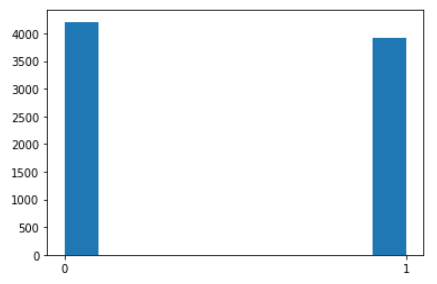
  • Data Preprocessingx와 y를 분리하는 작업과 x를 정규화 시키는 작업입니다. y는 class 항목을 따로 모아두었고, x는 학습이 잘 되도록 0과 1사이의 숫자로 정규화를 시켰습니다. class 항목의 분포를 살펴보면 아래와 같습니다.
    비슷한 분포를 가지고 있습니다. 이때 0은 독이 없는 일반 버섯을 의미하며, 1은 독이 있는 버섯입니다.
  • y = mushrooms['class'].values x = mushrooms.drop(['class'], axis=1) x = x.values x = (x - x.min()) / (x.max() - x.min()) plt.hist(y) plt.xticks([0, 1]) plt.show()
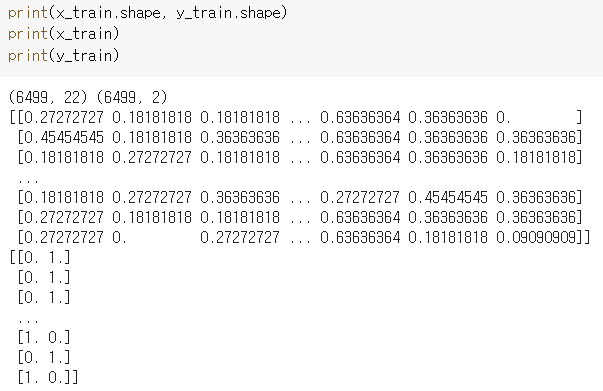
  • Train & Test Dataset Splitsklearn의 train_test_split이라는 훈련 데이터세트와 테스트 데이터세트를 분리하여 리턴해주는 클래스를 이용합니다. tf.keras.utils의 to_categorical은 0 또는 1로 이루어진 라벨들을 one-hot encoding시켜서 0은 [1. 0.]으로, 1은 [0. 1.]으로 변환시켜줍니다.
  • from sklearn.model_selection import train_test_split import numpy as np x_train , x_test , y_train , y_test = train_test_split(x, y,test_size=0.2,random_state=42) y_train = tf.keras.utils.to_categorical(y_train, num_classes=2) y_test = tf.keras.utils.to_categorical(y_test, num_classes=2)
  • Model 형성위와 같이 4개의 Dense Layer로 형성된 Sequential 네트워크를 선언하였고, 마지막 Dense Layer에서 units=2로 선언하여 one-hot encoding 형태로 나오도록 설정하였습니다. 또한 활성화 함수를 sigmoid 함수로 선언해주었습니다. 이항분류의 loss function은 binary_crossentropy로 선언하고 성능 평가는 정확도(accuracy)로 측정하도록 하였습니다.

  • model = tf.keras.Sequential([ tf.keras.layers.Dense(units=48, activation='relu', input_shape=(22,)), tf.keras.layers.Dense(units=24, activation='relu'), tf.keras.layers.Dense(units=12, activation='relu'), tf.keras.layers.Dense(units=2, activation='sigmoid') ]) model.compile(optimizer=tf.keras.optimizers.Adam(lr=0.07), loss='binary_crossentropy', metrics=['accuracy']) model.summary()
  • Model 훈련다른 신경망 네트워크들과 비슷하게 훈련은 fit메소드를 통해 실행하며, EarlyStopping이라는 callback 함수를 사용하여 val_loss가 3번 이상 연속으로 증가한다면 멈추고 최저의 loss를 사용하도록 선언하였습니다.
  • history = model.fit(x_train, y_train, epochs=25, batch_size=32, validation_split=0.25, callbacks=[tf.keras.callbacks.EarlyStopping(patience=3, monitor='val_loss')])
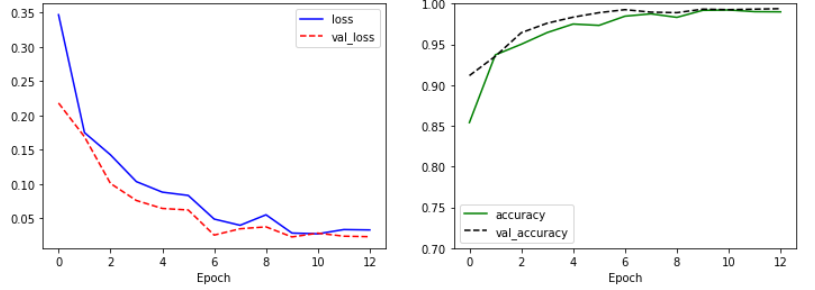
  • 결과
    • loss와 val_loss모두 낮아지는 이상적인 그래프를 형성 합니다.
    • test세트를 사용한 성능 평가 결과는 아래와 같습니다.
      손설 0.03, 정확도 99.3%의 우수한 모델임을 확인할 수 있습니다.
  • 예측
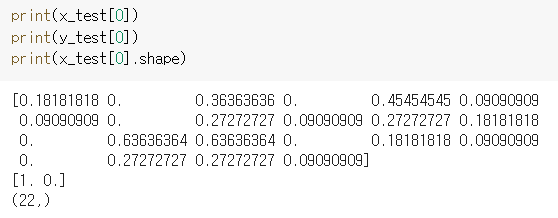
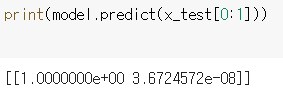
    • test세트의 첫번째 데이터를 사용하여 예측을 해보겠습니다. 해당 데이터는 [1. 0.]으로 라벨이 나온걸로 보아 독이 없는 일반적인 버섯입니다.
    • 아래의 결과를 보면 예측 값이 [1. 0.]에 가까운 결과가 나왔습니다.